
Embark on a journey to discover the ultimate winner between Day and Night Air Conditioners. Get ready for an insightful exploration of the key factors that differentiate these cooling units and determine the champion.
Delve into the world of air conditioning as we unravel the features, technologies, and efficiency levels that set Day and Night Air Conditioners apart.
Introduction to Day and Night Air Conditioners
Air conditioners play a crucial role in maintaining indoor comfort by regulating temperature and humidity levels in households. Choosing the right type of air conditioner is essential to meet specific cooling needs efficiently. Day and Night Air Conditioners are known for their reliability and performance, offering a range of features to enhance the overall cooling experience.
Energy efficiency is a key factor to consider when selecting an air conditioning unit, as it not only reduces electricity bills but also minimizes environmental impact.
Key Features of Day and Night Air Conditioners
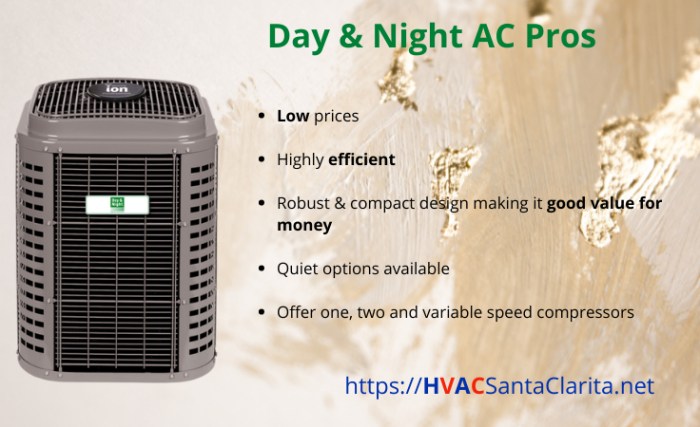
- High Energy Efficiency Ratings: Day and Night Air Conditioners are designed to be energy-efficient, helping to lower electricity consumption and operating costs.
- Quiet Operation: These air conditioners are known for their quiet performance, creating a peaceful indoor environment without disruptive noise.
- Advanced Cooling Technology: Day and Night units utilize advanced cooling technology to provide consistent and reliable cooling throughout the space.
- Smart Thermostat Compatibility: Some models are compatible with smart thermostats, allowing for convenient temperature control and energy savings.
Technology and Innovation
When it comes to technological advancements in air conditioning, Day and Night offer unique features that set them apart in the market. Let's delve into how these innovations impact the performance and efficiency of their air conditioners.
Day Air Conditioners
Day air conditioners are known for their cutting-edge technology that focuses on energy efficiency and smart cooling solutions. One of the standout features of Day air conditioners is their intelligent thermostat systems that adjust cooling levels based on the room's temperature, ensuring optimal comfort while minimizing energy consumption.
Additionally, Day AC units often come equipped with advanced air purification systems that filter out allergens and pollutants, providing clean and fresh air indoors.
Night Air Conditioners
Night air conditioners, on the other hand, are celebrated for their innovative design and quiet operation. Night AC units are designed with advanced noise reduction technology, making them virtually silent during operation, perfect for maintaining a peaceful environment in homes or offices.
Moreover, Night air conditioners are known for their durability and longevity, thanks to their robust construction and high-quality components that ensure reliable performance for years to come.
Impact of Technology on Performance
- Improved Energy Efficiency: Both Day and Night air conditioners leverage advanced technology to optimize energy usage, resulting in lower electricity bills and reduced environmental impact.
- Enhanced Comfort: The smart features and precise temperature control of Day and Night air conditioners contribute to a more comfortable indoor environment, adapting to varying conditions effortlessly.
- Longevity and Reliability: The technological innovations in both brands enhance the durability and reliability of their air conditioning units, offering long-lasting performance and peace of mind to consumers.
Cooling Capacity and Energy Efficiency
When comparing Day and Night Air Conditioners, it is crucial to consider their cooling capacity and energy efficiency to determine which brand offers better performance and cost savings in the long run.
Cooling Capacity
Day and Night Air Conditioners are known for their high cooling capacity, with models ranging from 1.5 tons to 5 tons. The cooling capacity of an air conditioner is measured in British Thermal Units (BTUs) per hour, indicating the amount of heat the unit can remove from a space.
Both Day and Night Air Conditioners are designed to effectively cool rooms of various sizes, providing ample cooling power to keep you comfortable even during hot summer days.
Energy Efficiency Ratio (EER)
The Energy Efficiency Ratio (EER) is a crucial factor to consider when assessing the energy efficiency of an air conditioner. It measures the cooling capacity of the unit in relation to the amount of energy it consumes. Day and Night Air Conditioners are known for their high EER ratings, with some models reaching up to 15 EER.
A higher EER rating indicates better energy efficiency, meaning the unit can provide the same level of cooling using less energy compared to lower-rated models.
Impact on Utility Costs
Energy efficiency plays a significant role in reducing utility costs over time. By opting for a highly efficient air conditioner like Day or Night, you can lower your energy consumption and ultimately save money on your electricity bills. The initial investment in a more energy-efficient unit may be higher, but the long-term savings on utility costs make it a worthwhile investment.
Additionally, energy-efficient air conditioners are environmentally friendly, reducing your carbon footprint while keeping your home cool and comfortable.
Noise Levels and User Experience
Noise levels produced by air conditioners can significantly impact user experience and comfort. Excessive noise can be distracting, disrupt sleep, and create an overall unpleasant environment. When choosing an air conditioner, it's essential to consider noise levels to ensure a peaceful and relaxing atmosphere in your home.
Comparison of Noise Levels
When comparing Day and Night Air Conditioners, both brands offer models with varying noise levels. Day Air Conditioners are known for their quiet operation, with some models featuring advanced sound-dampening technology to minimize noise. On the other hand, Night Air Conditioners also prioritize noise reduction, with specially designed compressors and fans to keep noise levels to a minimum.
- Day Air Conditioners: Known for quiet operation with sound-dampening technology.
- Night Air Conditioners: Designed with special features to reduce noise levels.
Impact on User Experience
High noise levels from an air conditioner can be disruptive, especially during nighttime use or when trying to relax in a quiet environment. Excessive noise can lead to irritation, sleep disturbances, and overall discomfort. By selecting an air conditioner with low noise levels, users can enjoy a more peaceful and comfortable living space.
- Air conditioner noise can disrupt sleep and cause irritation.
- Low noise levels contribute to a more peaceful and comfortable environment.
Tips for Selecting an Air Conditioner
When choosing an air conditioner, consider the noise levels of different models to ensure a quiet and enjoyable experience. Look for features such as sound-dampening technology, variable fan speeds, and insulated compressor compartments to reduce noise. Additionally, check product specifications and user reviews to get an idea of the noise levels before making a purchase.
- Consider features like sound-dampening technology and variable fan speeds to reduce noise.
- Check product specifications and user reviews for information on noise levels.
Maintenance and Durability
When it comes to keeping your air conditioner running smoothly and extending its lifespan, maintenance plays a crucial role. Let's delve into the maintenance requirements and durability of Day and Night Air Conditioners.
Maintenance Requirements
- Both Day and Night Air Conditioners require regular filter cleaning to ensure optimal performance and efficiency.
- It is recommended to schedule annual professional maintenance checks to inspect and tune up the unit.
- Day and Night units may have specific maintenance guidelines Artikeld in their user manuals that should be followed diligently.
Durability and Lifespan
- Day and Night Air Conditioners are known for their durability and can last for 10-15 years with proper maintenance.
- The lifespan of an air conditioner can also be influenced by factors like usage frequency, installation quality, and environmental conditions.
- Day and Night units are built to withstand wear and tear, offering reliable performance over the years.
Best Practices for Maintenance
- Regularly clean or replace air filters to prevent dust buildup and maintain airflow.
- Keep the area around the outdoor unit clear of debris to ensure proper ventilation and airflow.
- Schedule annual professional maintenance to address any issues and keep the unit running efficiently.
- Monitor the thermostat settings and avoid frequent temperature adjustments to reduce strain on the system.
Closing Summary
As we reach the end of this comparison, it's clear that each brand has its strengths and weaknesses. By weighing factors like cooling capacity, noise levels, and maintenance requirements, you can make an informed decision on which air conditioner emerges victorious in your eyes.
FAQ Summary
Which brand is more energy-efficient?
Day and Night Air Conditioners both prioritize energy efficiency, but specific models may vary. It's essential to check the Energy Efficiency Ratio (EER) for each unit to determine which one suits your needs best.
How do noise levels compare between Day and Night Air Conditioners?
Day and Night Air Conditioners are known for their quiet operation, but it's advisable to check the decibel levels of specific models to ensure you choose one that aligns with your comfort preferences.
What maintenance practices can help prolong the lifespan of these air conditioners?
Regular cleaning of filters, coils, and vents, along with scheduling professional maintenance checks, can significantly extend the lifespan of Day and Night Air Conditioners. Following manufacturer guidelines for upkeep is key.