
Delving into Air Conditioner Not Cooling Properly? Here’s What to Check, this introduction immerses readers in a unique and compelling narrative, providing a detailed overview of common issues that can affect the cooling performance of air conditioners. From clogged air filters to thermostat settings, we explore key factors that may lead to inadequate cooling.
As we delve deeper into the various aspects of air conditioner maintenance and troubleshooting, we aim to equip you with the knowledge needed to ensure your cooling system operates efficiently and effectively.
Common Issues with Air Conditioners
When your air conditioner is not cooling properly, there are several common issues that could be causing the problem. Identifying these issues and understanding the importance of regular maintenance can help you prevent cooling problems in the future.
Importance of Regular Maintenance
Regular maintenance of your air conditioner is crucial to ensure that it functions efficiently. Over time, dust and debris can accumulate in the unit, leading to reduced cooling capacity. By scheduling regular maintenance, you can keep your air conditioner in optimal condition and prevent issues with cooling.
Clogged Air Filter Impact
A clogged air filter is one of the most common reasons why an air conditioner may not cool properly. When the air filter is dirty or clogged, it restricts airflow, making it harder for the unit to cool the air effectively.
Regularly changing or cleaning the air filter can improve cooling efficiency and prevent strain on the system.
Checking the Thermostat
When your air conditioner is not cooling properly, one of the first things to check is the thermostat. The thermostat plays a crucial role in regulating the temperature and ensuring that your AC system functions efficiently.To verify if the thermostat is set correctly for cooling, follow these steps:
Verifying Thermostat Settings
- Check the thermostat mode: Make sure the thermostat is set to "cool" mode rather than "heat" or "fan only" mode.
- Adjust the temperature setting: Set the thermostat temperature lower than the current room temperature to trigger the cooling cycle.
- Change the fan setting: Ensure the fan is set to "auto" mode, allowing it to operate only when cooling is needed.
Calibrating the thermostat is essential for accurate temperature control. A thermostat that is not calibrated correctly can lead to inaccurate temperature readings, causing the air conditioner to run longer than necessary or not cool the room effectively. It is recommended to calibrate the thermostat periodically to ensure optimal performance.
Inspecting the Air Vents and Ducts
When your air conditioner is not cooling properly, one of the key areas to inspect is the air vents and ducts. Blocked or dirty vents can significantly impact the airflow, leading to inefficient cooling and discomfort in your living space.Proper airflow through the vents and ducts is essential for the air conditioner to function effectively.
When the vents are blocked, the cooled air cannot circulate properly, resulting in uneven cooling or even no cooling at all in certain areas of your home.
Importance of Cleaning and Maintaining Air Vents and Ducts
- Regularly check and clean air vents to remove any dust, debris, or obstructions that may be blocking the airflow.
- Inspect ductwork for leaks or gaps that could be causing air loss, reducing the efficiency of the cooling system.
- Ensure that all vents are open and unobstructed to allow for proper airflow throughout your home.
- Consider hiring a professional to conduct a thorough duct cleaning to improve the overall performance of your air conditioning system.
Refrigerant Levels and Leaks
When it comes to the cooling process in an air conditioner, refrigerant plays a crucial role. Refrigerant is the substance responsible for absorbing heat from the indoor air and releasing it outside, allowing the air conditioner to cool the indoor space.
Impact of Low Refrigerant Levels or Leaks
If your air conditioner is not cooling properly, low refrigerant levels or leaks could be the culprit. When the refrigerant levels are too low, the air conditioner will struggle to remove heat effectively, leading to reduced cooling efficiency. Leaks in the refrigerant lines can also result in a loss of refrigerant, further impacting the system's ability to cool the air.
- Low refrigerant levels can cause the air conditioner to blow warm air instead of cold air.
- Leaking refrigerant can lead to ice buildup on the evaporator coils, hindering the cooling process.
- Both scenarios can result in increased energy consumption and higher utility bills.
Checking and Addressing Refrigerant Issues
If you suspect that your air conditioner has low refrigerant levels or a refrigerant leak, it is essential to contact a professional HVAC technician for assistance. They will be able to:
- Perform a thorough inspection to identify any leaks in the refrigerant lines.
- Recharge the refrigerant levels to ensure optimal cooling efficiency.
- Seal any leaks and repair the refrigerant lines to prevent further issues.
Epilogue
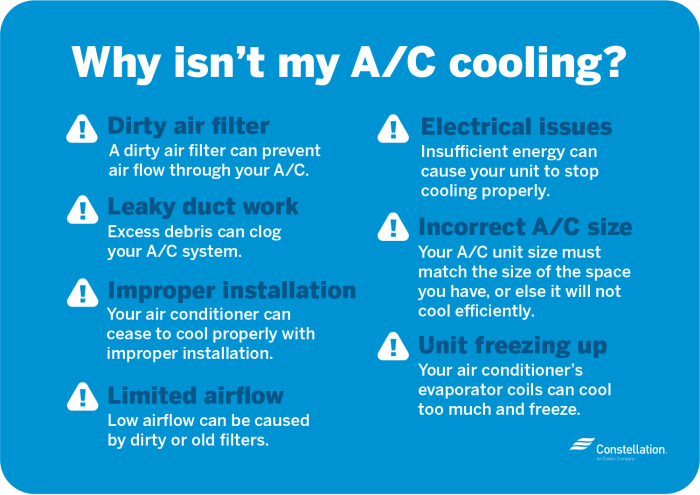
In conclusion, understanding the common issues and necessary checks for your air conditioner not cooling properly is essential in maintaining a comfortable indoor environment. By following the guidelines Artikeld in this discussion, you can troubleshoot and address cooling inefficiencies effectively, ensuring optimal performance of your cooling system.
Popular Questions
Why is my air conditioner not cooling properly?
There could be various reasons, such as a clogged air filter, thermostat issues, or low refrigerant levels. It's important to check these factors to improve cooling efficiency.
How often should I clean my air vents and ducts?
It's recommended to clean air vents and ducts at least once a year to ensure proper airflow and efficient cooling.
Can I check refrigerant levels myself?
Checking refrigerant levels requires specialized tools and knowledge. It's best to have a professional HVAC technician handle this task.